备注:已完结
类型:剧情片
主演:阿什利·代·兰格 Gabe Gabriel 埃文·亨斯特 Loren
语言:英语
年代:未知
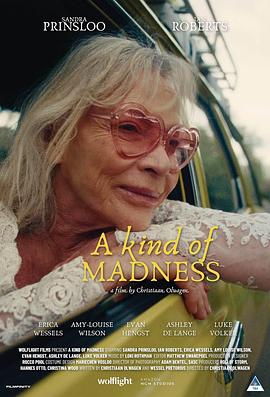
简介:A 70-year old man abducts his dementia-suffering wife from her retirement home and goes on the run from both the police and his adult children. Starring Sandra Prinsloo, Ian Roberts, Ashley De Lange, Luke Volker, Erica Wessels, Amy Louise Wilson, Evan Hengst Movie is made in South Africa.
备注:已完结
类型:剧情片
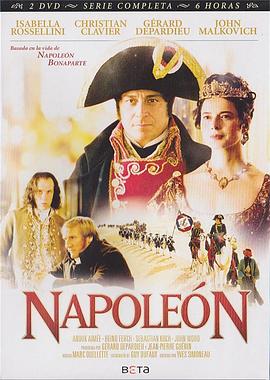
主演:克里斯蒂昂·克拉维埃 伊莎贝拉·罗西里尼 热拉尔·德帕迪约 约翰·马尔
导演:伊维斯·西蒙尼奥
语言:法语
年代:未知
简介:故事发生在1795年的法国,下级军官拿破仑(克里斯汀·克拉维尔 Christian Clavier 饰)遇见了美丽的约瑟芬(伊莎贝拉·罗西里尼 Isabella Rossellini 饰),一见钟情的两人很快就走到了一起。之后,拿破仑在战争中的出色表现和人民对他的拥戴引起了巴黎政府的不满,上司将拿破仑派往了遥远而又危险的埃及。 远在埃及的拿破仑得知国家的安全正受到反法联盟的威胁之时果断回国发动政变,最终成功的成为了首席执行官。然而到了1807年,在沙皇的支持和怂恿下,奥地利出兵法国,为了维系政权的稳固,拿破仑不得不同奥地利公主和亲,然而一切已经为时已晚,与此同时,悲伤的约瑟芬亦离开了拿破仑。
备注:已完结
类型:剧情片
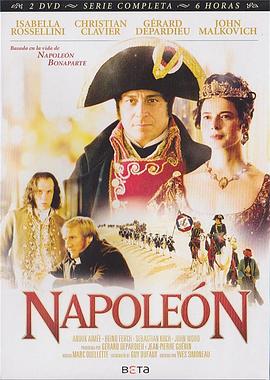
主演:克里斯蒂昂·克拉维埃 伊莎贝拉·罗西里尼 热拉尔·德帕迪约 约翰·马尔
导演:伊维斯·西蒙尼奥
语言:法语
年代:未知
简介:故事发生在1795年的法国,下级军官拿破仑(克里斯汀·克拉维尔 Christian Clavier 饰)遇见了美丽的约瑟芬(伊莎贝拉·罗西里尼 Isabella Rossellini 饰),一见钟情的两人很快就走到了一起。之后,拿破仑在战争中的出色表现和人民对他的拥戴引起了巴黎政府的不满,上司将拿破仑派往了遥远而又危险的埃及。 远在埃及的拿破仑得知国家的安全正受到反法联盟的威胁之时果断回国发动政变,最终成功的成为了首席执行官。然而到了1807年,在沙皇的支持和怂恿下,奥地利出兵法国,为了维系政权的稳固,拿破仑不得不同奥地利公主和亲,然而一切已经为时已晚,与此同时,悲伤的约瑟芬亦离开了拿破仑。
备注:已完结
类型:剧情片
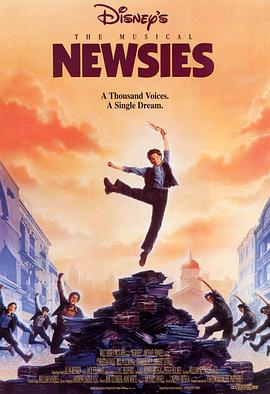
主演:Christian Bale David Moscow Luke Ed
导演:肯尼·奥特加
语言:英语
年代:未知
简介:故事发生在1899年的纽约,纽约街头处处可见叫卖报纸的报童,因为这些孩子们卖报属于自发行为,一直都没有一个可以管理和保护他们的组织,因此报童们常常受到财大气粗的报业老板们的压榨和剥削。杰克(克里斯蒂安·贝尔 Christian Bale 饰)是这些报童中的一员,相比去其他的孩子们,杰克显然要更为活泼,也更为机灵一些。 哈斯特(马克斯·卡塞拉 Max Casella 饰)和普利策(罗伯特·杜瓦尔 Robert Duvall 饰)是当时报业的两大巨头,相比之下,普利策的公司经营处于劣势,为了能够赚更多的钱,普利策决定提高报童购买报纸的价格,以获得更大的利润,这一举动引起了报童们的不满。趁着这个机会,一直想要做出一番大事业的杰克揭竿而起,带领着报童们开始了罢工运动。
备注:已完结
类型:剧情片
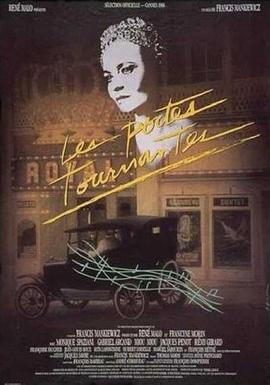
主演:Monique Spaziani Gabriel Arcand Mio
语言:法语
年代:未知
简介:Set in a small Quebec town in the late-1920′s, this emotional drama follows the life and exploits of Celeste Beaumont, a talented young pianist who gains local celebrity at the town movie theater for her gifts as a silent film pianist. ? Awkward Pierre Blaudell is her biggest fan and eventually marries her. ? Shortly after this she bears his son, Pierre, who joins the army. ? She insists on joining him at the base and his meddlesome, snooty parents insist she give them her son. ? Pierre is killed in the war, and Celeste flees to New York where she finds steady employment as a jazz pianist. ? She finds a life-long companion with a black musician and chronicles her experiences in a diary that she passes on to her son after he grows up. ? Her son becomes a painter and once his own son, Antoine, is grown, reads him the story of Celeste, the youth’s grandmother. ? Intrigued, Antoine heads to the Big Apple in hopes of finding her. This movie is an emotional drama about how Antoine, played beautifully by Fran?ois Méthé, discovers the details of his heritage. ? This film won many awards in Canada and at Cannes in 1988. ? Fran?ois Méthé, who was about 11-years-old, never acted again after this movie. From IMDb A quiet painter, separated from his wife for a year, receives a suitcase in the mail from his mother, whom he hasn’t seen since infancy. ? He believes she abandoned him to his wealthy, paternal grandparents. ? The suitcase contains mementos and a diary, a long letter to him, written over the years, with details of her youth, her first job as a pianist at a cinema, the coming of talkies, her marriage, and how he came to live with his grandparents. ? As he reads through the materials and her story comes to life, his son Antoine, who’s about 10 or 12, tries to break through his father’s silence and sorrow by taking matters into his own hands.
备注:已完结
类型:剧情片
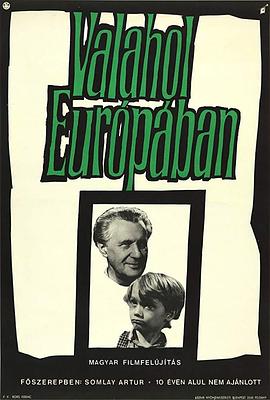
主演:Artúr Somlay Miklós Gábor Zsuzsa Bá
语言:其它
年代:未知
简介:Somewhere in the remote region, the war ends. In the midst of ruined cities and houses in the streets, in rural hamlets, everywhere where people still live, are children who have lost their homes and parents. Abandoned, hungry, and in rags, defenseless and humiliated, they wander through the world. Hunger drives them. Little streams of orphans merge into a river which rushes forward and submerges everything in its path. The children do not know any feeling; they know only the world of their enemies. They fight, steal, struggle for a mouthful of food, and violence is merely a means to get it. A gang led by Cahoun finds a refuge in an abandoned castle and encounters an old composer who has voluntarily retired into solitude from a world of hatred, treason, and crime. How can they find a common ground, how can they become mutual friends The castle becomes their hiding place but possibly it will also be their first home which they may organize and must defend. But even for this, the price will be very high. To this simple story, the journalist, writer, poet, scriptwriter, movie director, and film theoretician Béla Balázs applied many years of experience. He and the director Géza Radványi created a work which opened a new postwar chapter in Hungarian film. Surprisingly, this film has not lost any of its impact over the years, especially on a profound philosophical level. That is to say, it is not merely a movie about war; it is not important in what location and in what period of time it takes place. It is a story outside of time about the joyless fate of children who pay dearly for the cruel war games of adults. At the time it was premiered, the movie was enthusiastically received by the critics. The main roles were taken by streetwise boys of a children's group who created their roles improvisationally in close contact with a few professional actors, and in the children's acting their own fresh experience of war's turmoil appears to be reflected. At the same time, their performance fits admirably into the mosaic of a very complex movie language. Balázs's influence revealed itself, above all, in the introductory sequences an air raid on an amusement park, seen in a montage of dramatic situations evoking the last spasms of war, where, undoubtedly, we discern the influence of classical Soviet cinematography. Shooting, the boy's escape, the locomotive's wheels, the shadows of soldiers with submachine guns, the sound of a whistle—the images are linked together in abrupt sequences in which varying shots and expressive sharp sounds are emphasized. A perfectly planned screenplay avoided all elements of sentimentality, time-worn stereotypes of wronged children, romanticism and cheap simplification. The authors succeeded in bridging the perilous dramatic abyss of the metamorphosis of a children's community. Their telling of the story (the scene of pillaging, the assault on the castle, etc) independently introduced some neorealist elements which, at that time, were being propagated in Italy by De Sica, Rossellini, and other film artists. The rebukes of contemporary critics, who called attention to formalism for its own sake have been forgotten. The masterly art of cameraman Barnabás Hegyi gives vitality to the poetic images. His angle shots of the children, his composition of scenes in the castle interior, are a living document of the times, and underline the atmosphere and the characters of the protagonists. The success of the picture was also enhanced by the musical art of composer Dénes Buday who, in tense situations, inserted the theme of the Marseilaise into the movie's structure, as a motive of community unification, as an expression of friendship and the possibility of understanding. Valahol Europaban is the first significant postwar Hungarian film. It originated in a relaxed atmosphere, replete with joy and euphoria, and it includes these elements in order to demonstrate the strength of humanism, tolerance, and friendship. It represents a general condemnation of war anywhere in the world, in any form.