备注:已完结
类型:剧情片
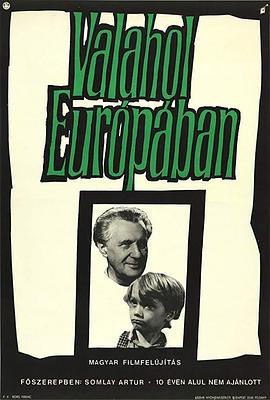
主演:Artúr Somlay Miklós Gábor Zsuzsa Bá
语言:其它
年代:未知
简介: Somewhere in the remote region, the war ends. In the midst of ruined cities and houses in the streets, in rural hamlets, everywhere where people still live, are children who have lost their homes and parents. Abandoned, hungry, and in rags, defenseless and humiliated, they wander through the world. Hunger drives them. Little streams of orphans merge into a river which rushes forward and submerges everything in its path. The children do not know any feeling they know only the world of their enemies. They fight, steal, struggle for a mouthful of food, and violence is merely a means to get it. A gang led by Cahoun finds a refuge in an abandoned castle and encounters an old composer who has voluntarily retired into solitude from a world of hatred, treason, and crime. How can they find a common ground, how can they become mutual friends? The castle becomes their hiding place but possibly it will also be their first home which they may organize and must defend. But even for this, the price will be very high. To this simple story, the journalist, writer, poet, scriptwriter, movie director, and film theoretician Béla Balázs applied many years of experience. He and the director Géza Radványi created a work which opened a new postwar chapter in Hungarian film. Surprisingly, this film has not lost any of its impact over the years, especially on a profound philosophical level. That is to say, it is not merely a movie about war it is not important in what location and in what period of time it takes place. It is a story outside of time about the joyless fate of children who pay dearly for the cruel war games of adults. At the time it was premiered, the movie was enthusiastically received by the critics. The main roles were taken by streetwise boys of a children's group who created their roles improvisationally in close contact with a few professional actors, and in the children's acting their own fresh experience of war's turmoil appears to be reflected. At the same time, their performance fits admirably into the mosaic of a very complex movie language. Balázs's influence revealed itself, above all, in the introductory sequences: an air raid on an amusement park, seen in a montage of dramatic situations evoking the last spasms of war, where, undoubtedly, we discern the influence of classical Soviet cinematography. Shooting, the boy's escape, the locomotive's wheels, the shadows of soldiers with submachine guns, the sound of a whistle—the images are linked together in abrupt sequences in which varying shots and expressive sharp sounds are emphasized. A perfectly planned screenplay avoided all elements of sentimentality, time-worn stereotypes of wronged children, romanticism and cheap simplification. The authors succeeded in bridging the perilous dramatic abyss of the metamorphosis of a children's community. Their telling of the story (the scene of pillaging, the assault on the castle, etc) independently introduced some neorealist elements which, at that time, were being propagated in Italy by De Sica, Rossellini, and other film artists. The rebukes of contemporary critics, who called attention to "formalism for its own sake" have been forgotten. The masterly art of cameraman Barnabás Hegyi gives vitality to the poetic images. His angle shots of the children, his composition of scenes in the castle interior, are a living document of the times, and underline the atmosphere and the characters of the protagonists. The success of the picture was also enhanced by the musical art of composer Dénes Buday who, in tense situations, inserted the theme of the Marseilaise into the movie's structure, as a motive of community unification, as an expression of friendship and the possibility of understanding. Valahol Europaban is the first significant postwar Hungarian film. It originated in a relaxed atmosphere, replete with joy and euphoria, and it includes these elements in order to demonstrate the strength of humanism, tolerance, and friendship. It represents a general condemnation of war anywhere in the world, in any form.
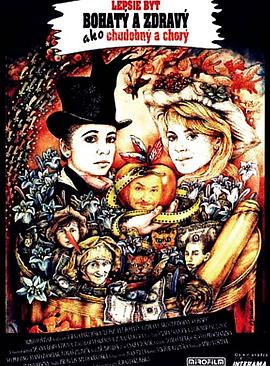
备注:已完结
类型:剧情片
主演:迪娜·霍瓦索瓦 达格玛·维斯科莫娃 朱拉什·库库拉 Lubomír P
导演:朱拉·亚库比斯克
语言:其它
年代:未知
简介:故事发生在捷克,诺娜(迪娜·霍瓦索瓦 Deana Horváthová 饰)是一个平凡的女人,一次偶然中,诺娜解释了名为艾斯特(达格玛·维斯科莫娃 Dagmar Veskrnová 饰)的护士,艾斯特告诉诺娜,她曾经的恋人是一名党员,在革命失败之后,心灰意冷的他选择了自杀。 诺娜怀孕了,可是,当她把这一喜讯告诉男友时,男友却选择了逃避和退缩,此时是艾斯特向诺娜伸出了援手,收留了无处可去的她。两个女人想要生存下去第一件事情就是要想方设法的赚钱,她们想了很多损招,最后还是靠卖掉了艾斯特已故的恋人的画作而赚了一大笔钱。就这样,两朵末路狂花走上了不归路。
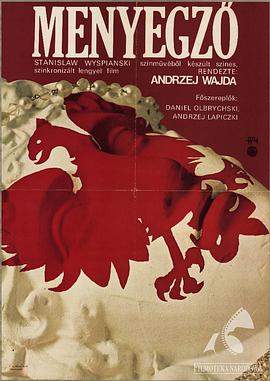
备注:已完结
类型:剧情片
主演:马雷克·瓦尔切夫斯基 伊萨贝拉·奥斯则瓦斯卡 埃娃·津泰克 达尼尔·奥
导演:安杰伊·瓦伊达
语言:其它
年代:未知
简介: Set at the turn of the century, the story concerns a Polish poet living in Cracow who has decided to marry a peasant girl. The wedding is attended by a heterogenous group of people from all strata of Polish society, who dance, get drunk and lament Poland's 100-year-long division of Poland under Russia, Prussia, and Austria. The bridegroom, a painter friend, and a journalist each in turn is confronted with spectres of Polish past. In the end a call to arms is called but turns out to be a hoax.
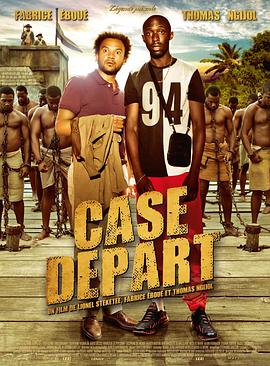
备注:已完结
类型:喜剧片
语言:法语
年代:未知
简介: 乔尔(托马斯·南吉乔尔 Thomas N'Gijol 饰)和瑞吉斯(法布里斯·厄部埃 Fabrice Eboué 饰)是同父异母的兄弟。乔尔是一个地地道道的黑人,他痛恨自己的血统和外貌,将自己人生的全部失败都归结于种族歧视之中。瑞吉斯虽然没有乔尔这么“黑”,但他同样不愿意承认自己拥有一半的黑人血统,兄弟两人之间的关系也十分的糟糕。 某日,传来了两人父亲去世的消息,父亲留下了一笔遗产,为了争夺这份遗产,兄弟两人之间发生了激烈的冲突,并且惹出了非常多的麻烦。这一切都被一位神秘的老妇人看在眼底,为了给兄弟两人一个教训,老妇人将他们传送回了奴隶年代,两兄弟成为了奴隶市场里挂牌出售的“商品”。

备注:已完结
类型:泰剧
主演:Boss Zo Peter Jeepetch 内特.坦纳查.帕欧森
导演:未知
语言:其它
年代:未知
简介: 因为新冠疫情,一群年轻人被要求隔离在学生公寓14天,这期间能否开出爱情之花,传说中的断头鬼又有什么隐藏的故事呢?
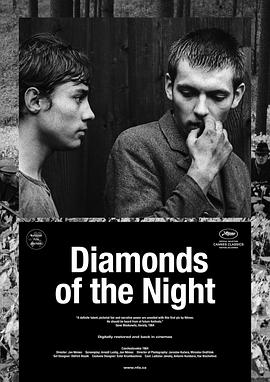
备注:已完结
类型:战争片
主演:Ladislav Jánsky Antonín Kumbera Irm
导演:杨·涅梅茨
语言:其它
年代:未知
简介: 杨·南曼奇在捷克新浪潮的地位,类似于雷奈在法国新浪潮一样。这是他的第一部剧情长片,描绘两个犹太男孩在被送往死亡集中营的途中,从火车上逃脱,被迫在乡野展开挣扎,艰难地求生存的故事,看似具备写实的基础,却被混合了幻想的影像,以及自由跳跃的叙事所重组。