备注:已完结
类型:剧情片
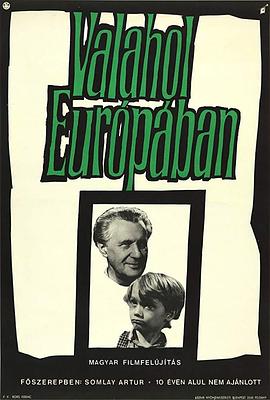
主演:Artúr Somlay Miklós Gábor Zsuzsa Bá
语言:其它
年代:未知
简介:Somewhere in the remote region, the war ends. In the midst of ruined cities and houses in the streets, in rural hamlets, everywhere where people still live, are children who have lost their homes and parents. Abandoned, hungry, and in rags, defenseless and humiliated, they wander through the world. Hunger drives them. Little streams of orphans merge into a river which rushes forward and submerges everything in its path. The children do not know any feeling; they know only the world of their enemies. They fight, steal, struggle for a mouthful of food, and violence is merely a means to get it. A gang led by Cahoun finds a refuge in an abandoned castle and encounters an old composer who has voluntarily retired into solitude from a world of hatred, treason, and crime. How can they find a common ground, how can they become mutual friends The castle becomes their hiding place but possibly it will also be their first home which they may organize and must defend. But even for this, the price will be very high. To this simple story, the journalist, writer, poet, scriptwriter, movie director, and film theoretician Béla Balázs applied many years of experience. He and the director Géza Radványi created a work which opened a new postwar chapter in Hungarian film. Surprisingly, this film has not lost any of its impact over the years, especially on a profound philosophical level. That is to say, it is not merely a movie about war; it is not important in what location and in what period of time it takes place. It is a story outside of time about the joyless fate of children who pay dearly for the cruel war games of adults. At the time it was premiered, the movie was enthusiastically received by the critics. The main roles were taken by streetwise boys of a children's group who created their roles improvisationally in close contact with a few professional actors, and in the children's acting their own fresh experience of war's turmoil appears to be reflected. At the same time, their performance fits admirably into the mosaic of a very complex movie language. Balázs's influence revealed itself, above all, in the introductory sequences an air raid on an amusement park, seen in a montage of dramatic situations evoking the last spasms of war, where, undoubtedly, we discern the influence of classical Soviet cinematography. Shooting, the boy's escape, the locomotive's wheels, the shadows of soldiers with submachine guns, the sound of a whistle—the images are linked together in abrupt sequences in which varying shots and expressive sharp sounds are emphasized. A perfectly planned screenplay avoided all elements of sentimentality, time-worn stereotypes of wronged children, romanticism and cheap simplification. The authors succeeded in bridging the perilous dramatic abyss of the metamorphosis of a children's community. Their telling of the story (the scene of pillaging, the assault on the castle, etc) independently introduced some neorealist elements which, at that time, were being propagated in Italy by De Sica, Rossellini, and other film artists. The rebukes of contemporary critics, who called attention to formalism for its own sake have been forgotten. The masterly art of cameraman Barnabás Hegyi gives vitality to the poetic images. His angle shots of the children, his composition of scenes in the castle interior, are a living document of the times, and underline the atmosphere and the characters of the protagonists. The success of the picture was also enhanced by the musical art of composer Dénes Buday who, in tense situations, inserted the theme of the Marseilaise into the movie's structure, as a motive of community unification, as an expression of friendship and the possibility of understanding. Valahol Europaban is the first significant postwar Hungarian film. It originated in a relaxed atmosphere, replete with joy and euphoria, and it includes these elements in order to demonstrate the strength of humanism, tolerance, and friendship. It represents a general condemnation of war anywhere in the world, in any form.
备注:已完结
类型:剧情片
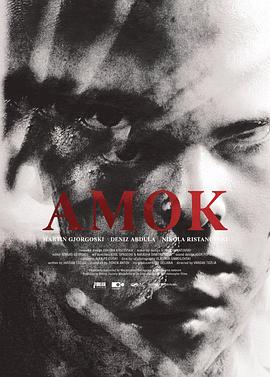
主演:Martin Gjorgoski 丹尼兹·阿布杜拉 尼古拉·里斯坦诺夫
导演:瓦尔丹·托兹加
语言:其它
年代:未知
简介:由瓦尔丹·托兹加编剧执导,主要讲述年轻人在犯罪道路上的经历。在一个由权力决定公平的国度,主人公菲利浦生活在青少年收养中心,在一个腐败警察的胁迫下,他被迫参与了一次可怕的案件,因而产生无法痊愈的心理创伤。尽管菲利浦拥有其老师的帮助、收养中心的照料、朋友佩塔尔的安慰,他最终还是未能战胜那次案件后的心理创伤带给他的痛苦。痛苦吞噬了他的理智,产生复仇之念,致使他将更多年轻人拉入他残酷命运的深渊。最终菲利浦通过其暴力、凶猛的手段,将迷失的年轻人带进了黑暗、暴力的犯罪世界。
备注:已完结
类型:剧情片
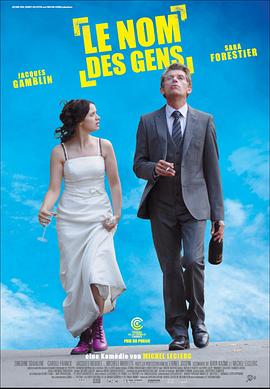
主演:雅克·冈布兰 莎拉·弗里斯蒂 齐达内·苏阿内 Carole Franc
语言:法语
年代:未知
简介:巴娅(莎拉·弗里斯蒂 Sara Forestier 饰)是一名右翼人士,在当今的政坛上十分的活跃。她传播思想的方式非常独特——但凡跟她有过床笫之欢的右翼男士们,都纷纷投入到了左翼的阵营之中。从小就生活在多元而宽松的家庭氛围之中的巴娅自幼便是开放而又火热的性格,对待感情和性十分开放,这和保守又刻板的亚瑟(雅克·甘布林 Jacques Gamblin 饰)恰恰相反。 亚瑟是一名循规蹈矩的科学家,不幸的童年和家族里的悲惨历史让他不自觉的背负起了沉重的枷锁,一辈子都生活在压抑之中。这让的他在机缘巧合之下同巴娅邂逅了,大相径庭的两人之间居然还碰撞出了爱情的火花。

备注:已完结
类型:剧情片
主演:瓦莱丽·勒梅西埃 西尔万·马赛尔 丹妮埃尔·菲肖 罗克·拉福蒂纳 An
导演:瓦莱丽·勒梅西埃
语言:法语
年代:未知
简介:法国独立制片公司Gaumont将拍一部关于席琳·迪翁的电影《爱的力量》(The Power of Love),成本2300万美元,影片将会出现多首迪翁的经典歌曲,包括“All by Myself”、“My Heart Will Go On”、“I’m Alive”等。 瓦莱丽·勒梅西埃(《巴黎淘气帮》《五月傻瓜》)执导,她也将饰演迪翁。影片记录迪翁从60年代在魁北克出生、成长,到十几岁时声名鹊起,再到她与经纪人、丈夫Rene Angelil以及家人的关系。法国2020年12月2日上映。
备注:已完结
类型:剧情片
主演:John W. Bowers Sebastian David Tigh
语言:英语
年代:未知
简介:負責維護布拉達郡內治安的警長,聽聞自己的轄區出現了某種前所未見的神祕生物,牠螫伏在人煙稀少的農地,卻不時有人目睹牠詭異面目的訊息傳來。警長起初不以為意,情況卻逐漸越演越烈…。當地一對夫婦的憑空蒸發,似乎和這生物脫不了關係,而警長的孩子們,也對這神祕生物產生了興趣。焦頭爛額的警長,不得不趕在自己的孩子落入未知生物的口中前,搶先對付那力量不明的可怖敵人…。