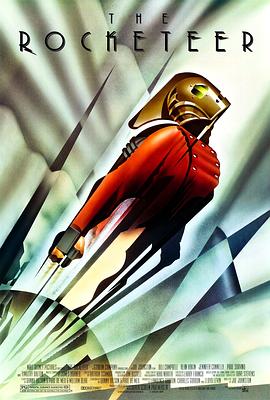
备注:已完结
类型:科幻片
主演:比利·坎贝尔 詹妮弗·康纳利 艾伦·阿金 提摩西·道尔顿 保罗·索维诺
导演:乔·庄斯顿
语言:英语
年代:未知
简介:《火箭人》(The Rocketeer)是迪士尼1991年推出的电影,故事题材是由 Dave Stevens 同名的图文小说改编而成。 本片是发生在1930年代的好莱坞,有一个军方的秘密武器意外落在一位竞技表演飞行员 Cliff Secord 手中,他对此一推进器颇感惊奇, 最后他背上了这付怪东西、戴上面具,成了行侠仗义的『火箭人』,然而各方人马都想夺得这项秘密武器,尤其有一位好莱坞影坛的知名男演员 Neville Sinclair ,他其实是纳粹潜伏在好莱坞的情报份子,为了夺得火箭,他还挟持了 Cliff 的女友 Jenny Blake,火箭人 Cliff 于是展开他的救援行动。 本片由《亲爱的我把孩子缩小了》、《野蛮游戏》、《侏罗纪公园3》以及《百胜天龙》影集的知名导演 Joe Johnston 所执导,他同时也是《星际大战》系列的特效大师。至于演员方面,男主角 Cliff 由 Bill Campbell 担任,女主角则是 Jennifer Connelly,至于片中那位大反派间谍演员,则是由曾演过007的 Timothy Dalton 担任。 本片配乐的是 James Horner ,原本原声带都已经绝版多年,但在前几年《铁达尼号》造成发烧的时候, James Horner 的作品又造成热潮,迪士尼旗下的好莱坞唱片于是再版发行了这张电影原声带,如今则又绝版了。
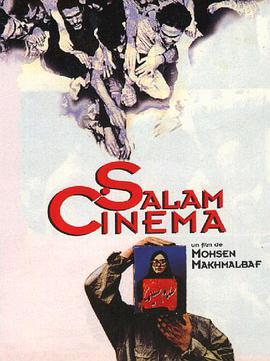
备注:已完结
类型:喜剧片
主演:Shaghayeh Djodat Behzad Dorani Feiz
导演:莫森·玛克玛尔巴夫
语言:其它
年代:未知
简介: 本片导演马克马巴夫计划拍摄一部关于电影百年的片子,需要雇用100名临时演员,他登了一个报纸广告. 然而当数以百计人们出现的时候,场面失控,临时他改变了注意。用摄影机记录下那些应聘者的陈述和想法,真实展露了伊朗社会各阶层的风貌。
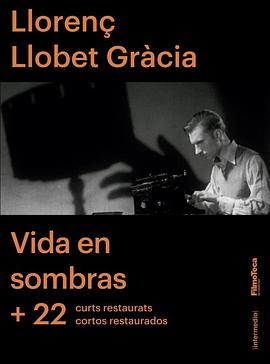
备注:已完结
类型:剧情片
主演:Fernando Fernán Gómez María Dolores
导演:洛伦斯·约贝特·格拉西亚
语言:其它
年代:未知
简介: A great spanish cult movie!! This is one of the most astonishing films ever made. It has some scenes that it should be in the history of cinema. Like the filming by Fernando Fernan Gomez of the militias using a big roll of paper to win a positions. Or the begging of the film based on real events. The birth of the director inside the carp where the first cinematographer was showing "the train arriving to the station". Being shoot in really simple way it's amazing the proper use of the audiovisual language. The late Guillermo Cabrera Infante showed this film in a Canadian film festival in Spanish without subtitles when the projection finish the audience didn't move and they ask for seen the film again. The effect of this film in the audience is unbelievable. None a single person that has seen this rare Spanish movie could forget it. Except the main actor Fernando Fernan Gomez who never remember work on it.
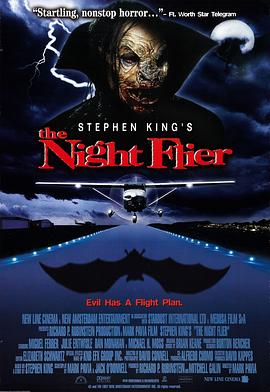
备注:已完结
类型:恐怖片
主演:米盖尔·弗尔 Julie Entwisle Dan Monahan M
语言:英语
年代:未知
简介:这晚,纽约州又一名机场管理员巴克暴毙在停机坪上,尸体乾瘪瘪的被人完全抽干了所有的血。这一事件震撼了新闻界,因为先前在缅因州也发生了类似的命案,于是,“吸血鬼复活”的传言传遍了美国的大街小巷,一时人人惊慌。这晚,在马里兰州雷雨之夜,身穿漆黑大披风的夜行者再次驾驶飞机犯案,又两位无辜的市民度惨死在他手中,犯案情节竟和《吸血鬼瑞菲》的电影情节一模一样。报社主编莫里森(丹尼?莫纳汉 Dan Monahan 饰)让拥有飞机执照的资深记者理查德(米高?佛瑞 Miguel Ferrer ?饰)越州对这一事件进行深入报导,到底还有多少人命丧恶魔之手?
备注:已完结
类型:战争片
主演:Andrzej Banaszewski Beata Barszczew
导演:斯坦尼斯拉夫·罗泽维格
语言:其它
年代:未知
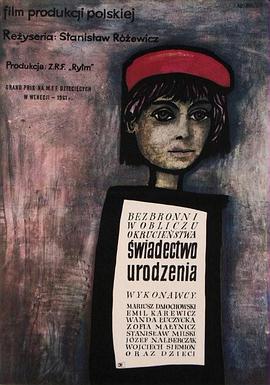
简介: In 1961, Stanislaw Rozewicz created the novella film "Birth Certificate" in cooperation with his brother, Taduesz Rozewicz as screenwriter. Such brother tandems are rare in the history of film but aside from family ties, Stanislaw (born in 1924) and Taduesz (born in 1921) were mutually bound by their love for the cinema. They were born and grew up in Radomsk, a small town which had "its madmen and its saints" and most importanly, the "Kinema" cinema, as Stanislaw recalls: for him cinema is "heaven, the whole world, enchantment". Tadeusz says he considers cinema both a charming market stall and a mysterious temple. "All this savage land has always attracted and fascinated me," he says. "I am devoured by cinema and I devour cinema I'm a cinema eater." But Taduesz Rozewicz, an eminent writer, admits this unique form of cooperation was a problem to him: "It is the presence of the other person not only in the process of writing, but at its very core, which is inserperable for me from absolute solitude." Some scenes the brothers wrote together others were created by the writer himself, following discussions with the director. But from the perspective of time, it is "Birth Certificate", rather than "Echo" or "The Wicked Gate", that Taduesz describes as his most intimate film. This is understandable. The tradgey from September 1939 in Poland was for the Rozewicz brothers their personal "birth certificate". When working on the film, the director said "This time it is all about shaking off, getting rid of the psychological burden which the war was for all of us. ... Cooperation with my brother was in this case easier, as we share many war memories. We wanted to show to adult viewers a picture of war as seen by a child. ... In reality, it is the adults who created the real world of massacres. Children beheld the horrors coming back to life, exhumed from underneath the ground, overwhelming the earth." The principle of composition of "Birth Certificate" is not obvious. When watching a novella film, we tend to think in terms of traditional theatre. We expect that a miniature story will finish with a sharp point the three film novellas in Rozewicz's work lack this feature. We do not know what will be happen to the boy making his alone through the forest towards the end of "On the Road". We do not know whether in "Letter from the Camp", the help offered by the small heroes to a Soviet prisoner will rescue him from the unknown fate of his compatriots. The fate of the Jewish girl from "Drop of Blood" is also unclear. Will she keep her new impersonation as "Marysia Malinowska"? Or will the Nazis make her into a representative of the "Nordic race"? Those questions were asked by the director for a reason. He preceived war as chaos and perdition, and not as linear history that could be reflected in a plot. Although "Birth Certificate" is saturated with moral content, it does not aim to be a morality play. But with the immense pressure of reality, no varient of fate should be excluded. This approached can be compared wth Krzysztof Kieslowski's "Blind Chance" 25 years later, which pictured dramatic choices of a different era. The film novella "On the Road" has a very sparing plot, but it drew special attention of the reviewers. The ominating overtone of the war films created by the Polish Film School at that time should be kept in mind. Mainly owing to Wajda, those films dealt with romantic heritage. They were permeated with pathos, bitterness, and irony. Rozewicz is an extraordinary artist. When narrating a story about a boy lost in a war zone, carrying some documents from the regiment office as if they were a treasure, the narrator in "On the Road" discovers rough prose where one should find poetry. And suddenly, the irrational touches this rather tame world. The boy, who until that moment resembled a Polish version of the Good Soldier Schweik, sets off, like Don Quixote, for his first and last battle. A critic described it as "an absurd gesture and someone else could surely use it to criticise the Polish style of dying. ... But the Rozewicz brothers do no accuse: they only compose an elegy for the picturesque peasant-soldier, probably the most important veteran of the Polish war of 1939-1945." "Birth Certificate" is not a lofty statement about national imponderabilia. The film reveals a plebeian perspective which Aleksander Jackieqicz once contrasted with those "lyrical lamentations" inherent in the Kordian tradition. However, a historical overview of Rozewicz's work shows that the distinctive style does not signify a fundamental difference in illustrating the Polish September. Just as the memorable scene from Wajda's "Lotna" was in fact an expression of desperation and distress, the same emotions permeate the final scene of "Birth Certificate". These are not ideological concepts, though once described as such and fervently debated, but rather psychological creations. In this specific case, observes Witold Zalewski, it is not about manifesting knightly pride, but about a gesture of a simple man who does not agree to be enslaved. The novella "Drop of Blood" is, with Aleksander Ford's "Border Street", one of the first narrations of the fate of the Polish Jews during the Nazi occupation. The story about a girl literally looking for her place on earth has a dramatic dimension. Especially in the age of today's journalistic disputes, often manipulative, lacking in empathy and imbued with bad will, Rozewicz's story from the past shocks with its authenticity. The small herione of the story is the only one who survives a German raid on her family home. Physical survial does not, however, mean a return to normality. Her frightened departure from the rubbish dump that was her hideout lead her to a ruined apartment. Her walk around it is painful because still fresh signs of life are mixed with evidence of annihilation. Help is needed, but Mirka does not know anyone in the outside world. Her subsequent attempts express the state of the fugitive's spirits - from hope and faith, moving to doubt, a sense of oppression, and thickening fear, and finally to despair. At the same time, the Jewish girl's search for refuge resembles the state of Polish society. The appearance of Mirka results in confusion, and later, trouble. This was already signalled by Rozewicz in an exceptional scene from "Letter from the Camp" in which the boy's neighbour, seeing a fugitive Russian soldier, retreats immediately, admitting that "Now, people worry only about themselves." Such embarassing excuses mask fear. During the occupation, no one feels safe. Neither social status not the aegis of a charity organisation protects against repression. We see the potential guardians of Mirka passing her back and forth among themselves. These are friendly hands but they cannot offer strong support. The story takes place on that thin line between solidarity and heroism. Solidarity arises spontaneously, but only some are capable of heroism. Help for the girl does not always result from compassion sometimes it is based on past relations and personal ties (a neighbour of the doctor takes in the fugitive for a few days because of past friendship). Rozewicz portrays all of this in a subtle way even the smallest gesture has significance. Take, for example, the conversation with a stranger on the train: short, as if jotted down on the margin, but so full of tension. And earlier, a peculiar examination of Polishness: the "Holy Father" prayer forced on Mirka by the village boys to check that she is not a Jew. Would not rising to the challenge mean a death sentance? Viewed after many years, "Birth Certificate" discloses yet another quality that is not present in the works of the Polish School, but is prominent in later B-class war films. This is the picture of everyday life during the war and occupation outlined in the three novellas. It harmonises with the logic of speaking about "life after life". Small heroes of Rozewicz suddenly enter the reality of war, with no experience or scale with which to compare it. For them, the present is a natural extension of and at the same time a complete negation of the past. Consider the sleey small-town marketplace, through which armoured columns will shortly pass. Or meet the German motorcyclists, who look like aliens from outer space - a picture taken from an autopsy because this is how Stanislaw and Taduesz perceived the first Germans they ever met. Note the blurred silhouettes of people against a white wall who are being shot - at first they are shocking, but soon they will probably become a part of the grim landscape. In the city centre stands a prisoner camp on a sodden bog ("People perish likes flies the bodies are transported during the night") in the street the childern are running after a coal wagon to collect some precious pieces of fuel. There's a bustle around some food (a boy reproaches his younger brother's actions by singing: "The warrant officer's son is begging in front of the church? I'm going to tell mother!") and the kitchen, which one evening becomes the proscenium of a real drama. And there are the symbols: a bar of chocolate forced upon a boy by a Wehrmacht soldier ("On the Road") a pair of shoes belonging to Zbyszek's father which the boy spontaneously gives to a Russian fugitive a priceless slice of bread, ground under the heel of a policeman in the guter ("Letters from the Camp"). As the director put it: "In every film, I communicate my own vision of the world and of the people. Only then the style follows, the defined way of experiencing things." In Birth Certificate, he adds, his approach was driven by the subject: "I attempted to create not only the texture of the document but also to add some poetic element. I know it is risky but as for the merger of documentation and poety, often hidden very deep, if only it manages to make its way onto the screen, it results in what can referred to as 'art'." After 1945, there were numerous films created in Europe that dealt with war and children, including "Somewhere in Europe" ("Valahol Europaban", 1947 by Geza Radvanyi), "Shoeshine" ("Sciescia", 1946 by Vittorio de Sica), and "Childhood of Ivan" ("Iwanowo dietstwo" by Andriej Tarkowski). Yet there were fewer than one would expect. Pursuing a subject so imbued with sentimentalism requires stylistic disipline and a special ability to manage child actors. The author of "Birth Certificate" mastered both - and it was not by chance. Stanislaw Rozewicz was always the beneficent spirit of the film milieu he could unite people around a common goal. He emanated peace and sensitivity, which flowed to his co-workers and pupils. A film, being a group work, necessitates some form of empathy - tuning in with others. In a biographical documentary about Stanislaw Rozewicz entitled "Walking, Meeting" (1999 by Antoni Krauze), there is a beautiful scene when the director, after a few decades, meets Beata Barszczewska, who plays Mireczka in the novella "Drops of Blood". The woman falls into the arms of the elderly man. They are both moved. He wonders how many years have passed. She answers: "A few years. Not too many." And Rozewicz, with his characteristic smile says: "It is true. We spent this entire time together."
备注:已完结
类型:剧情片
主演:安吉拉·兰斯伯瑞 杰拉丁·卓别林 托尼·柯蒂斯 爱德华·福克斯 罗克·
导演:盖伊·汉弥尔顿
语言:英语
年代:未知
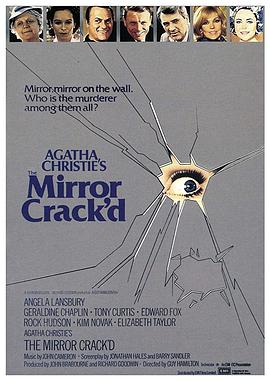
简介: 玛丽拉(伊丽莎白·泰勒 Elizabeth Taylor 饰)是一位在行业内声名显赫的电影明星,在一场宴会上,一起死亡事件的发生让她陷入了危险的境地。原来,死者死于一杯毒酒,而这杯毒酒本应被玛丽拉饮下。警方迅速介入了调查,随着线索的展开,玛丽拉的丈夫杰森(洛克·哈德森 Rock Hudson 饰)成为了终点怀疑对象。 不幸的是,事情并没有就此终结,神秘的匿名电话,诡异的敲诈字条,在巨大的压力之下,玛丽拉的精神迅速濒临着崩溃的边缘。杰森真的是凶手吗?又是谁对玛丽拉有着如此的深仇大恨呢?聪明的马普尔小姐(安吉拉·兰斯伯瑞 Angela Lansbury 饰)看出了其中的端倪,她能够顺利解决这一案件吗?
备注:已完结
类型:科幻片
主演:劳伦·日尔曼 迈克尔·比恩 米洛·文堤米利亚 考特尼·万斯 艾什顿·霍
导演:泽维尔·吉恩斯
语言:英语
年代:未知
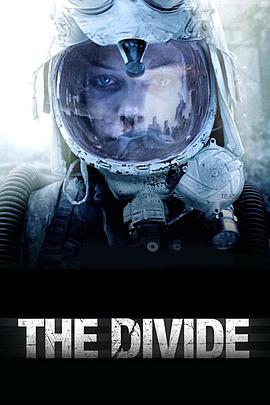
简介:纽约市一场灾难性的核爆炸后,乔什(米洛·文提米利亚 Milo Ventimiglia 饰)、米奇(迈克尔·比恩 Michael Biehn 饰)、玛丽琳(罗姗娜·阿奎特 Rosanna Arquette 饰)、萨姆(罗姗娜·阿奎特 Rosanna Arquette 饰)、达尔文(考特尼·万斯 Courtney B. Vance 饰)、伊娃(劳伦·日尔曼 Lauren German 饰)、艾德里安(阿什顿·霍尔莫斯 Ashton Holmes 饰)、波比(迈克尔·艾克朗德 Michael Eklund 饰)这8个陌生人躲进了一座公寓大楼的地下室中。突然一群身着核生化防护服的武装人员出现,掳走了幸存者中的小女孩并准备要杀死剩下的所有人,幸存者们反抗并杀死了武装人员。但地下室的大门被武装人员从外面封死了,人们被困在了地下室中。随着时间的流逝,幽闭恐惧症让这次从避难所变成了牢笼人们开始绝望,已经开始心理扭曲,做出了一些常人难以想象的的事……
备注:已完结
类型:剧情片
主演:Bette Davis
导演:Seth Holt
语言:英语
年代:未知
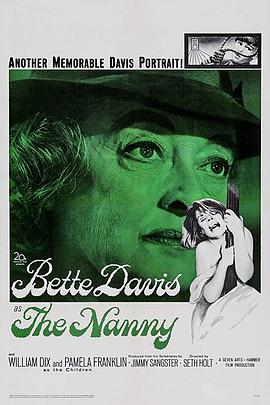
简介: 妹妹苏西(Angharad Aubrey 饰)的死亡带给了乔伊(William Dix 饰)巨大的创伤,为此,他甚至接受了心理治疗。乔伊坚信,妹妹的死亡和家里的保姆(贝蒂·戴维斯 Bette Davis 饰)有关,可是家中没有人相信他,就连乔伊的父母也觉得这只是乔伊的妄想而已。 某日,乔伊的母亲因为食物中毒被送往了医院,她的妹妹佩(吉儿·贝纳特 Jill Bennett 饰)来到乔伊家照看他,恰巧撞见了保姆想要用枕头闷死乔伊的一幕。佩患有心脏病,在病发时,保姆拒绝拿药给佩,眼睁睁的看着她挣扎在死亡线上。原来,保姆曾经有过一个私生子,但这个孩子不幸死去了,孩子的死给保姆的精神带来了严重的打击,才造成了这种种的悲剧。
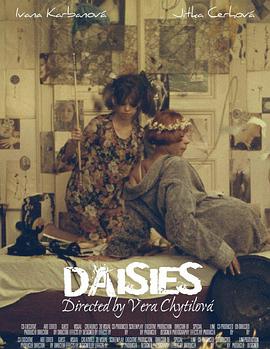
备注:已完结
类型:喜剧片
主演:伊特卡·采尔霍娃 伊万娜·卡尔班诺娃 Julius Albert
导演:维拉·希蒂洛娃
语言:其它
年代:未知
简介: 影片开始于两个都叫玛丽的少女(Jitka Cerhová 和 Ivana Karbanová 饰)的对话:没有人理解我们,这个世界上的一切正在变得越来越糟糕。于是两人决定:我们也要变得越来越坏!玛丽一号喜欢和老男人约会,在他们吃饭的时候,玛丽二号会突然出现,旁若无人地大吃特吃。玛丽一号把老男人送上火车,老男人以为她会陪着他,火车开动,她却下了火车。玛丽二号在一个收藏蝴蝶标本的男青年家中,用他的标本遮住自己身体的隐秘部位。她们在夜总会里捣乱,最后被赶走。她们无意中闯入一个没有人的宴会,开始肆无忌惮地享受美食.....本片献给精神生活一团糟的人们。